Why Teaching Writing Can Be Overwhelming
Feeling overwhelmed by teaching subject and predicate to your elementary students? We get it. Writing is hard.
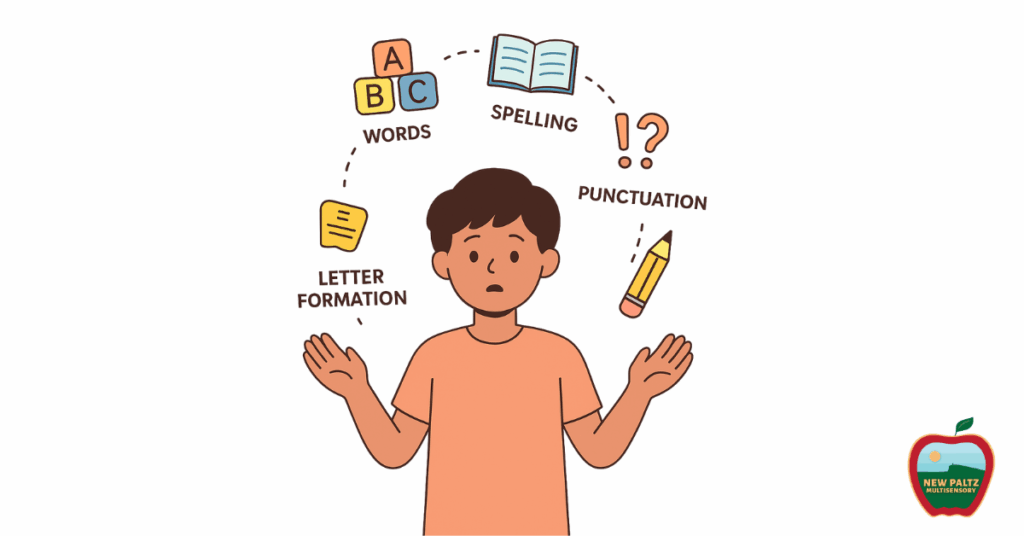
Writing is actually the hardest task we ask of our students. When a student writes, they have to think of what they want to say. They have to hold those words in their head, think about spelling and spacing, along with many other considerations for writing a sentence. And finally, they have to remember letter formation and actually write the words.
Add to that teachers who may not feel that their current writing curriculum meets their students’ needs, plus IEP needs, differentiation needs, and a school day that zooms by, and you have a lot of stressed out kids and teachers!
Luckily, you’re in the right place. Every successful writer needs to understand a few simple concepts. Today, we’ll focus on one essential concept—subject and predicate—and show you how to bring it into every part of your school day, not just during writing blocks.
Why? Because integrating writing strategies across the curriculum gives you richer insight into your students’ comprehension and understanding. And let’s be honest…what teacher wouldn’t want that?
If you’re looking for affordable, ready-to-use, evidence-based, editable writing resources to make this easier, our NPM Writing Collective is here to help.

Understanding the Building Blocks of a Sentence
Where do we start? First things first: we need to make sure your students really know what a sentence is. What does a sentence need to have?
I know—it sounds basic. How can kids get through elementary, middle, or even high school without knowing what makes a good sentence? You’d be surprised. Many students have been writing sentences for years without truly understanding them. They throw together words and hope for the best—and it shows in their writing.
Establishing that a sentence has a subject (who the sentence is about) and a predicate (what happens) is essential. So how do we teach that? We start by showing what sentences look like without these basic building blocks.
Step-by-Step: Modeling Fragments for K–2
For K–2 students, begin by removing either the subject or predicate from a sentence. Then, model fixing it orally as a class before moving into small groups or independent practice.
Example fragment:
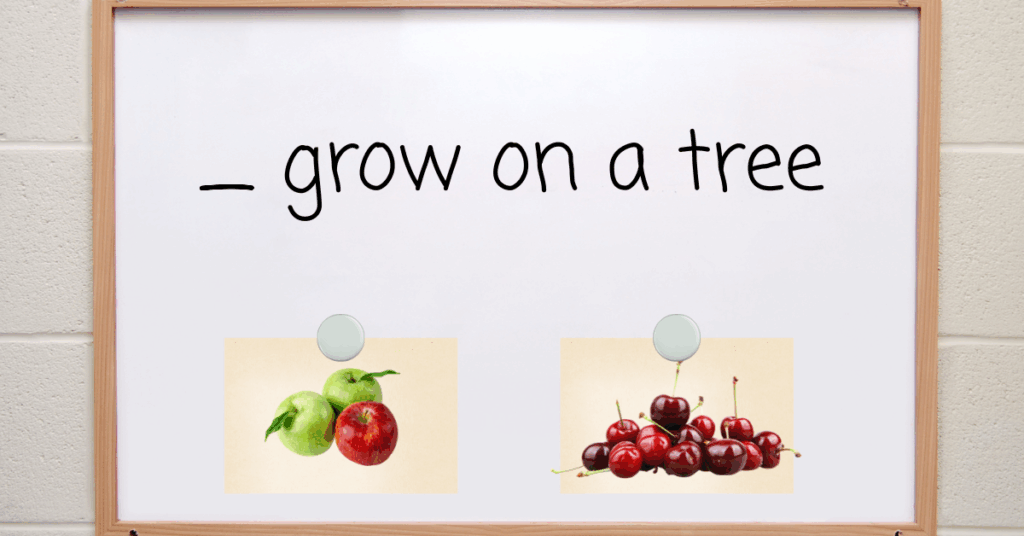
grow on a tree
Modeling the process:
- Think aloud: “Hmm, something’s missing. This is not a sentence—it’s a fragment, or a piece of a sentence. I’m going to mark this with an F for fragment. What grows in a tree?”
- Generate ideas out loud: “Apples grow on a tree. Cherries grow on a tree. I like apples better, and it’s fall. I’ll go with apples.”
- Write the corrected sentence below the fragment:
- apples grow on a tree
- apples grow on a tree
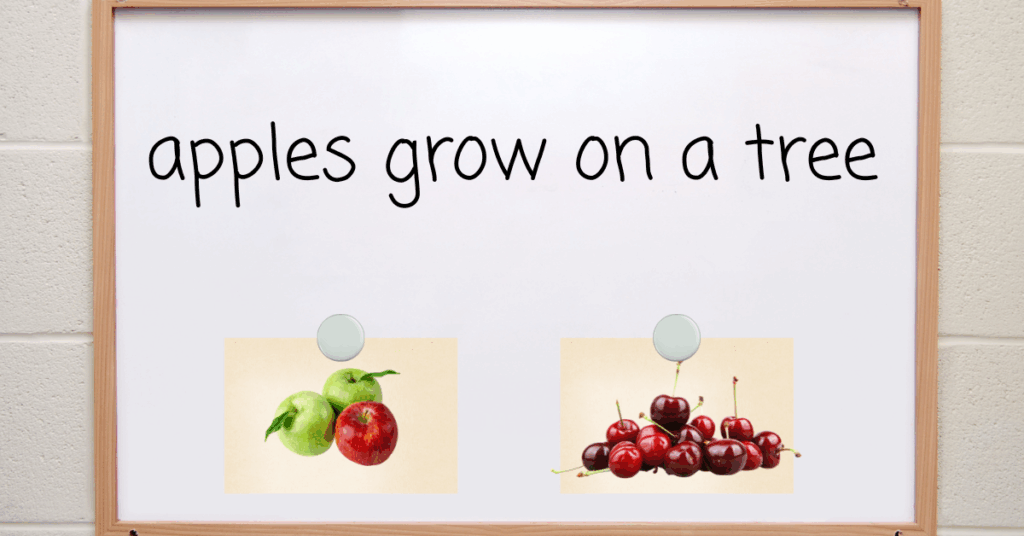
I would deliberately leave off the capital letter and punctuation, then announce that I was done with my sentence, adding a little fun by pretending not to understand what’s missing. The goal, of course, is for students to recognize that sentences need to start with a capital letter and end with punctuation.
Tips for differentiation:
- Use pictures of things that grow on trees to support struggling readers and English Language Learners.
- Repeat this process multiple times using the “I do, we do, you do” approach.
Vary your examples—sometimes the subject is missing, sometimes the predicate. Variation is key!
Step-by-Step: Modeling Fragments for 3-5
Older students still benefit from modeling, but you can introduce the terms subject and predicate more explicitly. Start with a basic sentence that’s missing either the subject or predicate and model it just like you did with younger students.
We’ll still take a basic sentence that’s missing the subject or predicate and model.
Example fragment:
Halloween
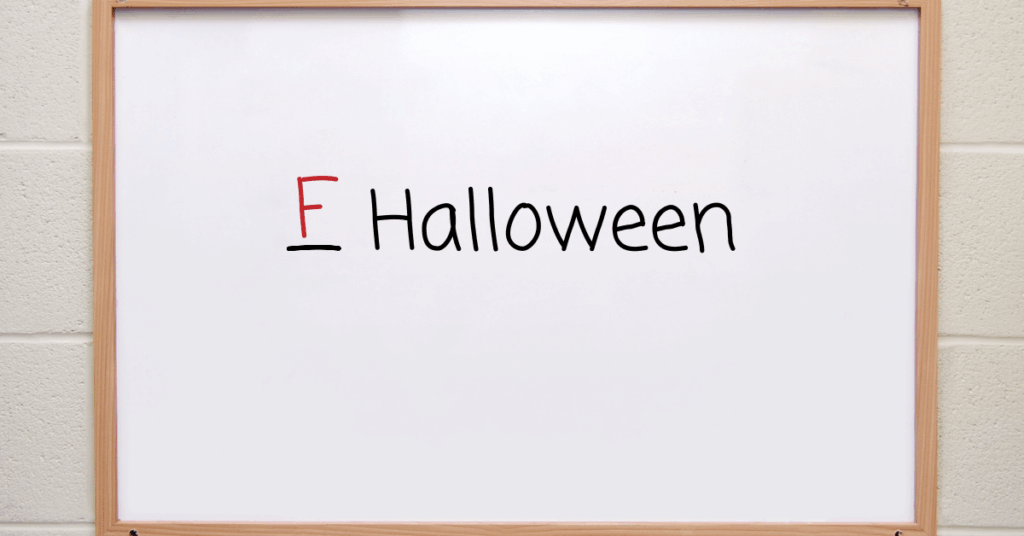
Modeling process:
- Think aloud: “Hmm. Something’s missing from this. This is not a sentence. It’s a fragment. I’m going to put an F on this little line because it’s not a complete sentence. Halloween what?”
- Generate ideas out loud related to the fragment:
- “Halloween is a holiday.”
- “Halloween is the best holiday.”
- “Halloween is the holiday where we get to trick-or-treat.”
- “Halloween is a holiday.”
- Choose one idea that provides the predicate and write it on the board. You might deliberately leave off capitalization and punctuation at first to reinforce that component, even though it’s not the focus of this lesson.
- You might consider including a second example tied to the current curriculum and do a quick “We do” together. Then have students complete the second example on a whiteboard or paper, identifying whether it’s a sentence or fragment before correcting it.
This skill works well for homework, exit tickets, or quick formative assessments. Students practice sentence recognition while also learning to identify what’s missing and add something that makes sense.
Try This in Your Classroom!
Ready to try this strategy with your class? Share your experience in the comments—we’d love to hear how it goes!
✅ Looking for ready-to-use writing lessons grounded in the science of reading, plus time-saving tools and a supportive community?
👉 Join the NPM Writing Collective today.